

Surgical technique
V-CAF TechniqueVertically Coronally Advanced Flap for lower incisors and a shallow vestibule
The advanced surgical variant developed by Giovanni Zucchelli to achieve root coverage while increasing vestibular depth in the critical lower anterior region.
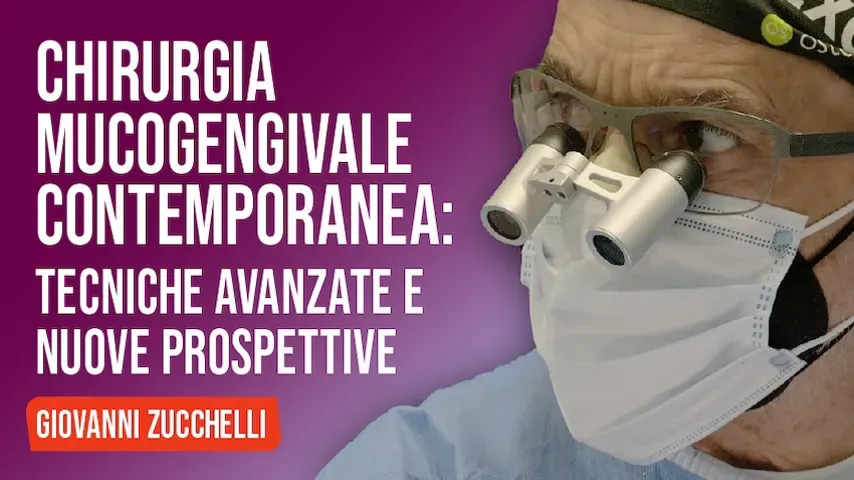
The V-CAF is an evolution of the coronally advanced flap devised by Giovanni Zucchelli to overcome the anatomical limits of the lower anterior region (mandibular incisors). The technique combines coronal advancement with a vertical vector, removing lip muscle pull and increasing vestibular depth.
01 · The technique
What the V-CAF Technique Is and When It’s Used
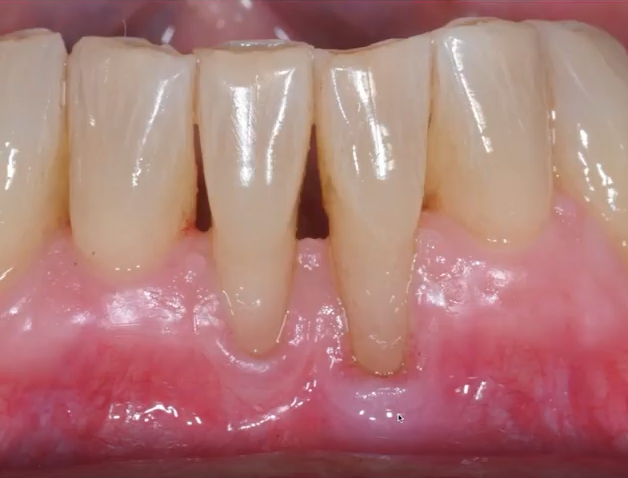
Treating gingival recession on the lower incisors is one of the most demanding challenges in mucogingival surgery because of a shallow vestibule, high frenum attachment and muscle pull. The V-CAF technique changes the design of the vertical releasing incisions and the apical elevation, so the flap can be moved coronally while the labial mucosa is “verticalised” to restore the vestibule.
- Indications: single or multiple gingival recessions on mandibular incisors, a shallow vestibule, pulling frena.
- Clinical goal: complete root coverage combined with a gain in vestibular depth and keratinised tissue.
- Advantages: no post-operative muscle pull, long-term margin stability and a restored vestibular anatomy without exposed free gingival grafts.
The protocol
The Surgical Steps One by One
- 01
Design and verticalised incisions
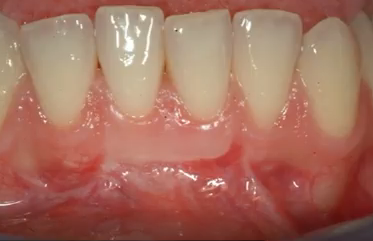
Intrasulcular incisions and vertical releasing incisions extended beyond the mucogingival line to fully free the labial mucosa.
- 02
Split-full-split elevation and myotomy
Deep dissection of the submucosal plane to detach the muscle fibres responsible for the pull.
- 03
Connective tissue graft (CTG) placement
A thin-to-medium thickness graft is placed under the flap to stabilise the volume and increase attached gingiva.
- 04
Apical suturing and coronal advancement
Apical sutures anchor the repositioned mucosa to create the new vestibular fornix, while coronal suspended sutures stabilise the margin beyond the cemento-enamel junction.
02 · The shallow vestibule
Solving the Shallow Vestibule
In conventional cases, advancing a flap coronally over a reduced vestibule risks flattening it further and causing the recession to recur under lip pressure. The V-CAF overcomes this contraindication.
- Combined with a CTG: adding a connective tissue graft achieves complete root coverage in 90% of cases.
- A stable vestibular gain: studies report an increase in vestibular depth of 4 to 6 mm, maintained at 12 months.
The instructor
The Technique Told by the Person Who Devised It
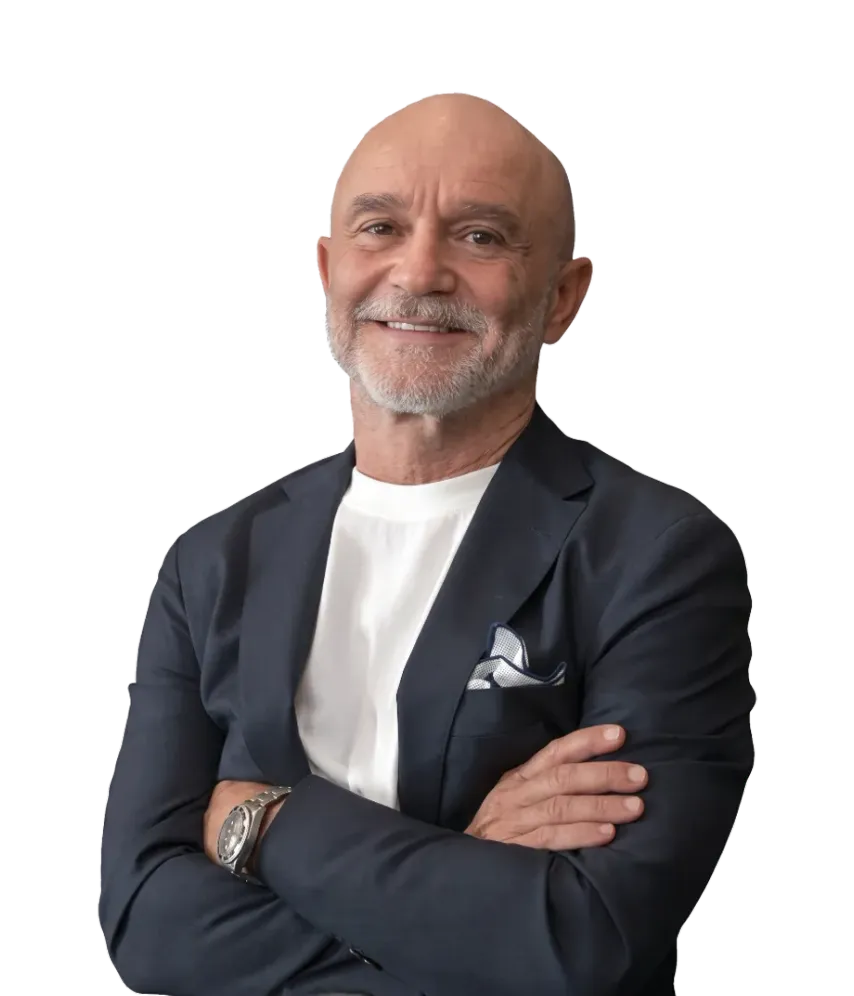 Giovanni ZucchelliPeriodontist and mucogingival surgeon · Originator of the V-CAF technique
Learn the technique
The courses on osteocom dedicated to the V-CAF technique


Learn the V-CAF technique
Watch the technique performed live on osteocom: every surgical step commented one by one.
Go to the catalogue