

Surgical technique
Soft Tissue Wall TechniqueTreatment of periodontal and peri-implant bone defects
The innovative technique developed by Giovanni Zucchelli that uses the surrounding soft tissue as a containing “wall” to guide bone and mucogingival regeneration, for maximum stability and esthetics.
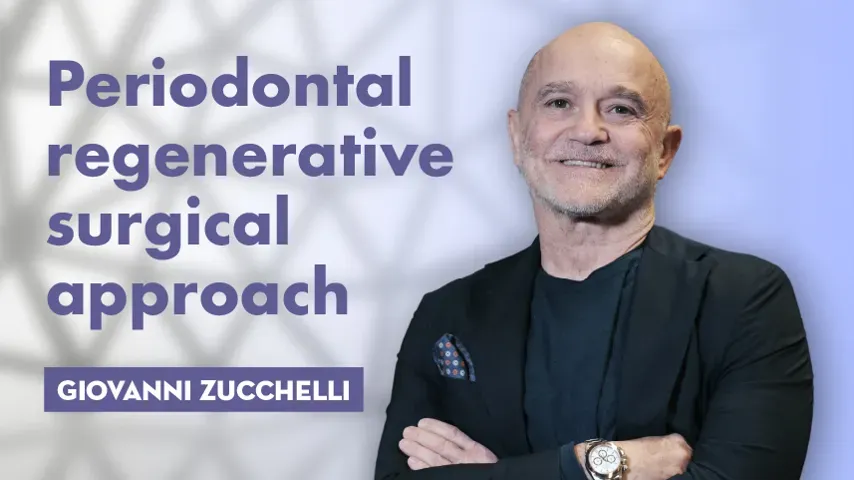
The Soft Tissue Wall Technique is an advanced surgical approach devised by Giovanni Zucchelli to manage complex bone defects. Rethinking the classic concepts of regeneration, it uses a carefully designed and positioned mucogingival flap to create a true containing biological wall, reducing the need for rigid meshes or membranes and optimising the blood supply.
01 · The technique
What the Soft Tissue Wall Technique Is and When It’s Used
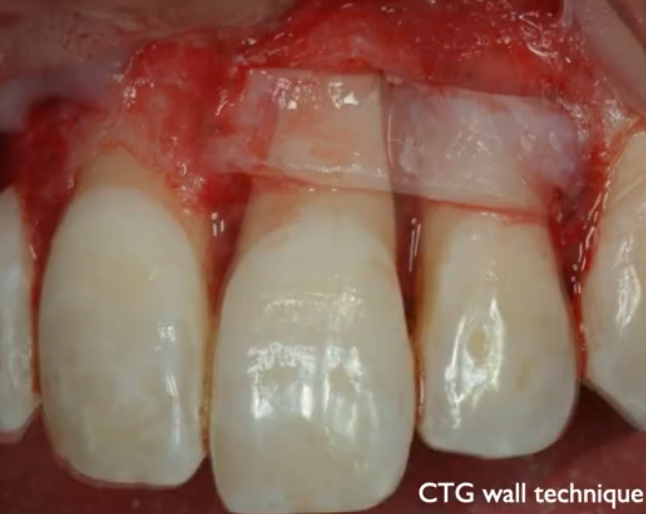
The Soft Tissue Wall Technique is a fundamental evolution in reconstructive periodontal and peri-implant surgery. Rather than relying solely on rigid mechanical barriers to stabilise the biomaterial or bone graft, the technique turns the patient’s own soft tissue into the primary containing wall.
By making the most of the mobilisation and thickness of the gingival/mucosal flap, it creates a protected, vascularised space that keeps the bone graft particles stable and covers the defect completely without tension.
- Indications: deep periodontal (intrabony) defects, peri-implant bone dehiscences and fenestrations, volume restoration in high esthetic-value areas.
- Clinical goal: bone regeneration and soft-tissue volume gain in a single surgical step, with no exposure of non-resorbable barriers.
- Advantages: lower post-operative morbidity, reduced risk of wound dehiscence, optimal vascularisation of the regenerated site and esthetic stability over time.
The protocol
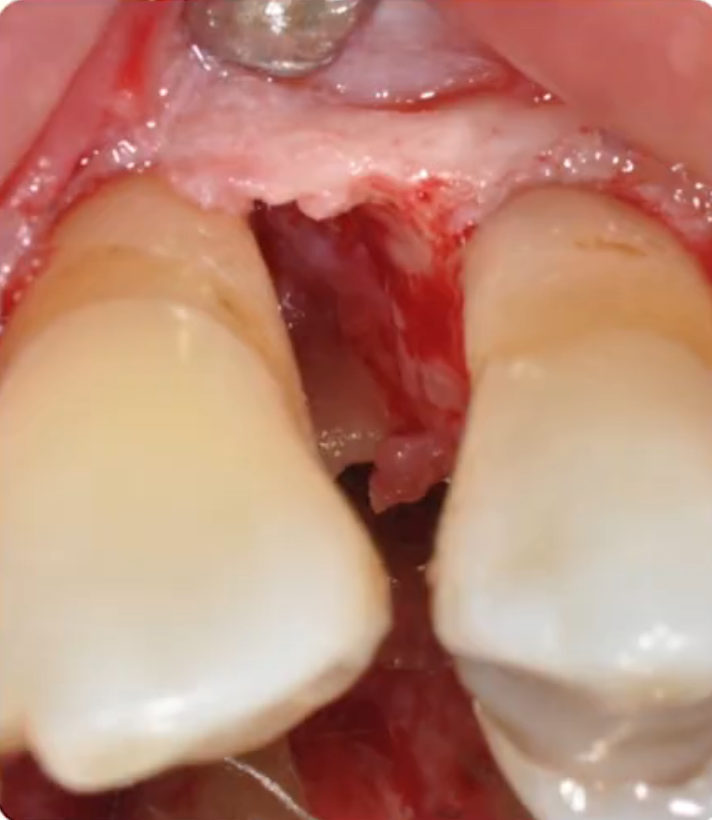
The Surgical Steps One by One
- 01
Flap design and preparation
Flap design for maximum vascular preservation. Calibrated sulcular and paramarginal incisions isolate the bone defect and a full/partial-thickness portion of soft tissue able to act as a biological barrier.
- 02
Elevation and deep mobilisation
Muscle and periosteal release for a tension-free flap. A key step of the Zucchelli protocol: the flap is mobilised by coronal and apical dissection to remove all muscle tension and ensure passive coverage of the defect.
- 03
Debridement and biomaterial placement
Preparation of the recipient bed and grafting. Cleaning of the bone or peri-implant defect, surface decontamination and placement of the biomaterial, respecting the shape and limits of the volume to rebuild.
- 04
‘Soft Tissue Wall’ positioning and suturing
Coronal stabilisation and primary-intention closure. The flap is moved and anchored to create the containing biological “wall” over the graft, stabilised with suspended sutures and tension-free interrupted sutures.
02 · The biological innovation
Beyond the Limits of Membranes: the Biological Wall
In traditional guided tissue regeneration protocols, rigid membranes or titanium meshes often carry a high risk of early exposure, with the resulting infection and partial or total failure of the regenerated tissue.
The Soft Tissue Wall Technique changes this paradigm by entrusting the containing and osteopromotive role to the native blood supply of the soft tissues.
- Direct vascularisation: with no rigid avascular barrier against the overlying flap, healing and graft revascularisation are faster.
- Passive closure: the flap release technique allows stable, maintainable primary-intention coverage even with significant volume gains.
03 · The esthetic value
Simultaneous Bone and Mucogingival Regeneration
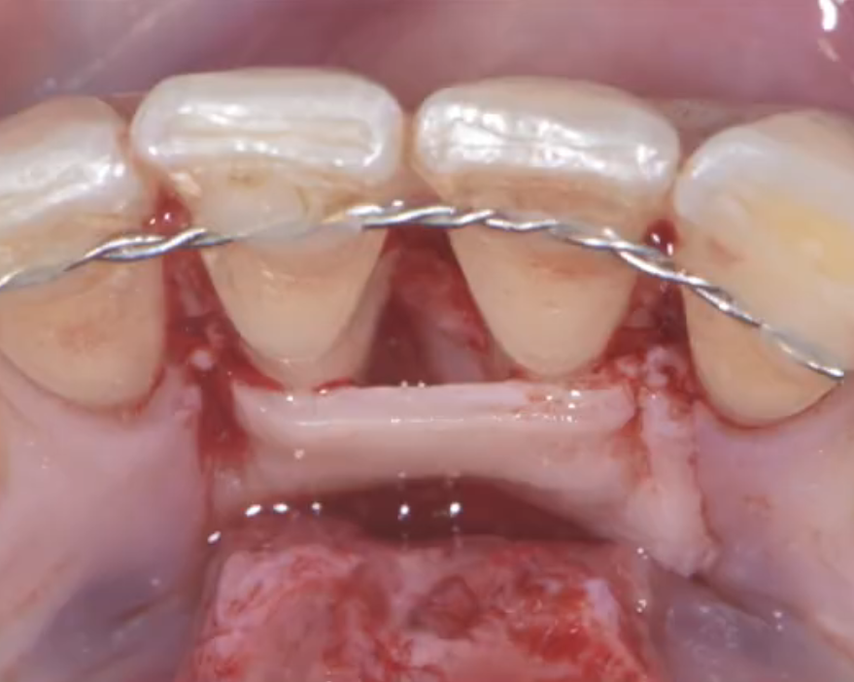
A frequent problem when rebuilding bone defects in the upper anterior region is the loss of gingival architecture and papillae. Giovanni Zucchelli’s technique coordinates, in a single surgical session, the reconstruction of the underlying bone support and the esthetic repositioning of the gingival margin.
- Restoring emergence-profile volumes: recreates the natural convexity of the alveolar ridge.
- Colour and thickness integration: increases the thickness of peri-implant or periodontal keratinised tissue, protecting the site from future recurrence and resorption.
The instructor
The Technique Told by the Person Who Devised It
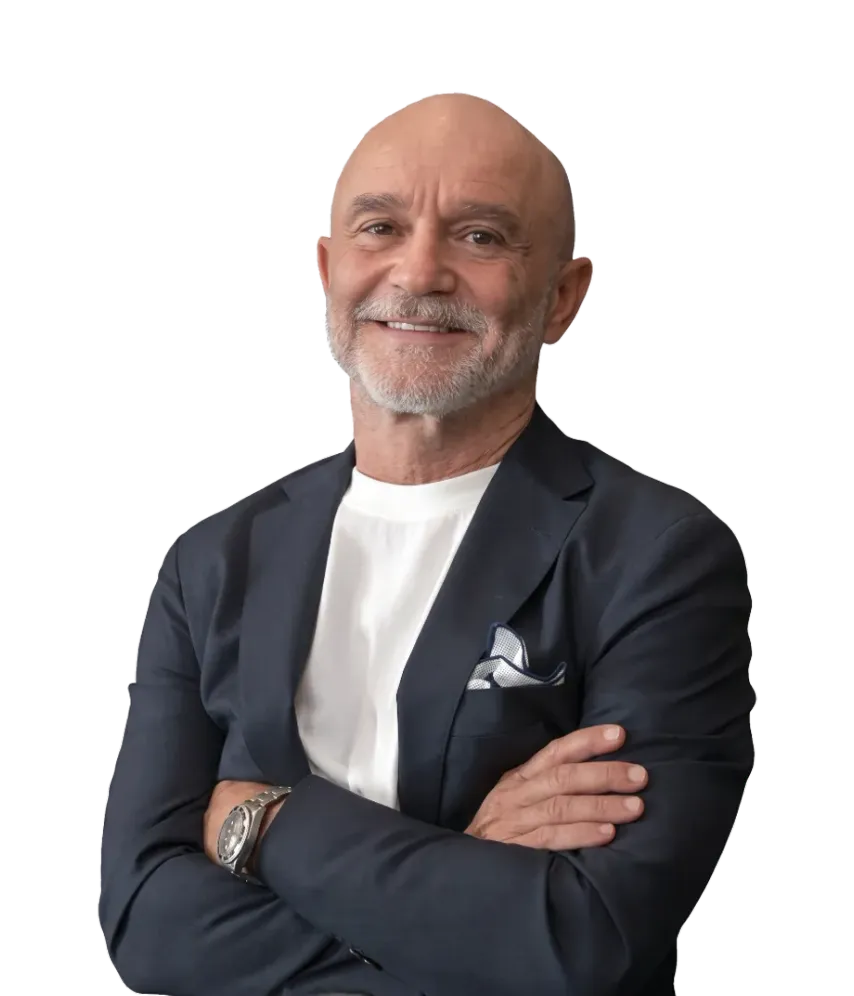 Giovanni ZucchelliPeriodontist and mucogingival surgeon · Originator of the Soft Tissue Wall Technique
Learn the Soft Tissue Wall Technique
Watch the technique performed live on osteocom: every surgical step on flap design, tissue mobilisation and biomaterial handling, commented one by one.
See the courses on this technique