Analyse des arbres décisionnels : évaluation de la littérature et critères diagnostiques
 Trailer
- Lifetime access


What it covers
La littérature propose de nombreux arbres décisionnels. Leur difficulté n’est pas de les connaître : c’est de savoir comment les utiliser lorsque le patient devant vous ne rentre pas parfaitement dans les cases.
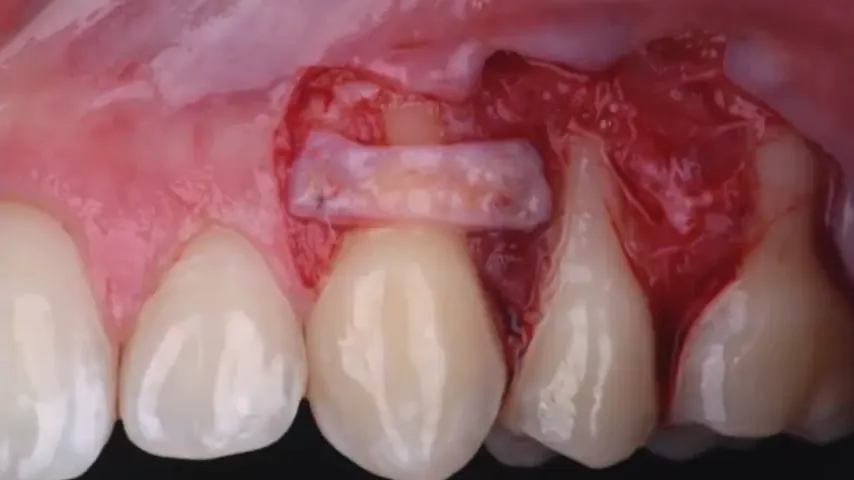
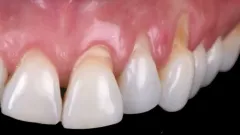
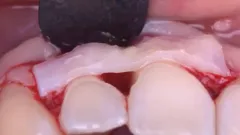
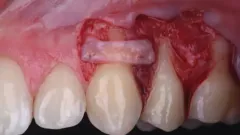
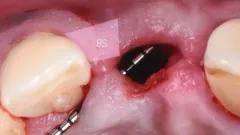
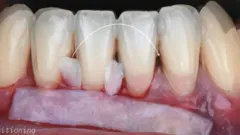
Cette leçon analyse les cadres décisionnels majeurs, notamment ceux de Stefanini et d’Aroca, pour en extraire les paramètres réellement utiles en pratique : lésions cervicales non carieuses, position dentaire, perte d’attache interproximale, tissu kératinisé et anatomie papillaire.
L’enjeu : comprendre ce que chaque arbre apporte, où il atteint ses limites et comment passer d’une lecture théorique à une décision clinique individualisée.
Cette leçon aborde notamment :
- Revue critique des arbres de la littérature : analyse des forces et des limites des cadres décisionnels de Stefanini et d'Aroca.
- Prérequis et modificateurs : gestion des usures cervicales, des malpositions orthodontiques et des pertes interproximales avant l'acte chirurgical.
- Mesures anatomiques : quantification du tissu kératinisé latéral et évaluation de l'épaisseur du phénotype à l'aide d'une sonde parodontale.
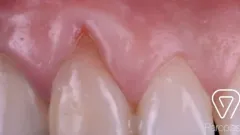
- Évaluation papillaire 2D vs 3D : comprendre pourquoi l'évaluation papillaire bidimensionnelle traditionnelle montre ses limites dans les cas complexes.
The course's lessons 10 lessons
 1
 2
 3
 4
 5
 6
 7
 9
 10
Instructors
Dr. Benjamin Cortasse graduated from the University of Montpellier, where he earned Advanced Graduate Certificates (CES) in Biomaterials and Periodontology, alongside Post-Graduate University Diplomas (DU) in Oral Implantology and Maxillofacial Expertise. He maintains a private practice in Pernes-les-Fontaines, France, while actively lecturing in periodontology and implantology for various university master’s programs and scientific organizations, including the Société Odontologique de Paris (SOP). As a member of an international micro-surgery research group led by Dr. Eric Van Dooren, Dr. Cortasse focuses on digital workflows, micro-surgical protocols, and innovative instrumentation design. Notably, he co-developed the Paroplastic microsurgical instrument kit with Hu-Friedy and was awarded the prestigious Grand Prix de l'Innovation in 2016 for instrument design.
Dr. Julien Mourlass received his dental degree from René Descartes University (Paris V) and completed his specialized post-graduate residency in periodontics and implant dentistry at the Ashman Department of Periodontology and Implant Dentistry at New York University (NYU). He serves as the Scientific Co-Director and Co-Editor-in-Chief of the peer-reviewed journal Titane (Quintessence Publishing) and has authored numerous international scientific publications on periodontal plastic surgery, tissue regeneration, and advanced soft tissue harvesting techniques, such as the Harvesting Oblique Tuberosity (HOT) technique. As an internationally recognized speaker, Dr. Mourlass regularly lectures for the French Society of Periodontology and Oral Implantology (SFPIO) and the SOP. Together with Dr. Cortasse, he co-founded the Paroplastic educational system to advance decision-making and micro-surgical methodologies in soft tissue management.
Lessons play straight from the browser with nothing to install, and pick up where you left off.
You enter your billing details at checkout: the invoice is issued on those and you download it from Account → Your purchases.
Frequently asked questions
Simple: you have 15 days to try it. If the video course is not for you, write to support@osteocom.me and we refund the full amount to the payment method you used. For multiple or repeated purchases we assess each request case by case.
No. You pay once and the video course is yours for good: no renewal, no expiry. Watch it as often as you like, even years later, whenever you need a refresher.
Yes, in 3 installments with no interest and no extra fees: today you pay just a third and get the whole video course straight away. The other two are charged automatically, one a month, to the same payment method, with nothing for you to do. You get a single invoice for the full amount and follow the installments from Account → Your purchases. It applies to video course orders from €400 (US$450, £350, CHF 400 or CAD 600), VAT excluded: if you are close, the cart tells you how much is missing.
By credit or debit card, PayPal, Apple Pay, Google Pay or Klarna, with a safe, secure payment. If you prefer a bank transfer, you can use it for one-off payments: the video course is activated when the transfer arrives, within minutes with an instant transfer.
Right away in «My courses»: as soon as the payment is confirmed you can start the first lesson, and we send you an email with the button «Go to my courses». With a bank transfer it is activated when the transfer arrives.
Prices exclude VAT, as in professional purchases: VAT is worked out from your billing details and shown before you confirm, with no surprises. With a valid EU VAT number (checked on VIES) you pay no VAT thanks to the reverse charge; outside the European Union no VAT is charged.
Yes, always. After payment it reaches you automatically by email, attached, issued to the details you enter at checkout, your practice's VAT number included. You find it again whenever you like in Account → Your purchases.
Yes. Watch the lessons on computer, tablet or smartphone, straight from the browser with no app to install, and each video picks up where you stopped, even when you switch devices: start at the practice, finish at home.
Whichever you prefer: the site chat answers straight away, and on WhatsApp from the button on this page or at support@osteocom.me our team answers and helps you work out whether the video course is right for you.
Ready to start?
Analyse des arbres décisionnels : évaluation de la littérature et critères diagnostiques
99.00 €+ VAT